Josh Jacob

MADBUSTERS: United Healthcare

A 60-second television advertisement for the world's largest health care company

2 min read

[0-4 sec | Quirky pizzicato string music]
A cozy living room. A fire roars as a dog stretches on the hearth. 

[4-9 sec]
Customer 1, a middle-aged black woman, sits in a wingback chair in the living room, as the viewer joins her in media res.
Customer 1: “I just think of choice… that feeling of ownership, like my health is truly in my hands.”

[9-16 sec]
Customer 2, a young white man, sits on a couch in front of his Funko Pop collection.
Customer 2: “I love the ‘Compare Plans’ tool. There are so many categories, I really make a day of it—it’s my Black Friday.”

[16-23 sec]
Customer 3, an older white man, stands around a kitchen table with his family.
Customer 3: “Well, we’ve always been a United family. My daddy had United, and I’ve had United my entire career.”

[23-33 sec]
Customer 2: “Open enrollment season is my favorite time of the year. I love sitting down and seeing what’s new in the health insurance space, whether it’s higher premiums or higher deductibles, higher copays or higher out-of-pocket maximums.”

[33-40 sec]
Customer 1: “There’s so much innovation coming out of our Nation’s Great Insurers, but I truly think United leads the pack. I couldn’t imagine ever switching.”

[40-55 sec | String music swells]
Customer 3: “Earlier in my career, I had less money, so I bought less insurance, but now, later in my career, I have more money, so I buy more insurance. And seeing that journey…”
He begins to cry as his son pats his shoulder. A line graph of Customer 3’s monthly take home pay over the past 40 years appears, revealing a gradual increase.
Customer 3: “...just reminds me of how far I’ve come.”

[55-60 sec | Strings reach a reflective coda as sleigh bells fade in]
A snowy New England town appears with the United logo overlaid in the corner.
ON SCREEN TEXT: From our family at United to yours… Wishing you a happy open enrollment season.

Daniel Yoon

Fall Chores

2 min read

As of October 20th, 2025, the nighttime ambient temperature has plummeted. Unfortunately, the mosquitoes still linger in small droves, but the outdoors are ours to reclaim for a season or two.


Bigger picture, we have much left to do.

  1. Eliminate the English Ivy in the Privacy Border
  2. Eliminate the English Ivy in the front yard.
  3. Eliminate the English Ivy in the Moonwoods
  4. Seal the pond.
  5. Build the sink
  6. Work out a reasonable seed cultivation system
  7. Outfit the den into an orangerie (winter greenhouse for trees)


Seasonally, we mostly have to clean up and weed.

  1. Uproot the usual pests: mulberry weed, chamber bitter, English Ivy, mock strawberry, burford holly, Mimosa
  2. Uproot the lovely tree seedlings: winged elm, oaks, maples, pines, cherry laurel, hickory, sweetgum, black gum
  3. Clean up fallen sticks and debris
  4. Cultivate and move desirable tree seedlings: Mulberry, redbud
  5. Propagate desirable woody plants: Oakleaf Hydrangea, elderberry
  6. Bring in the peppers, lemongrass, citrus trees, indoor plants
  7. Plant woody plants. This year, I want to get more oakleaf hydrangea, beautyberry, ilexes, and viburnum in the ground.

I also need to get back into brewing effective microbes, and perhaps I will finally get to making some biochar.

Mulberry Weed:

Mulberry Weed

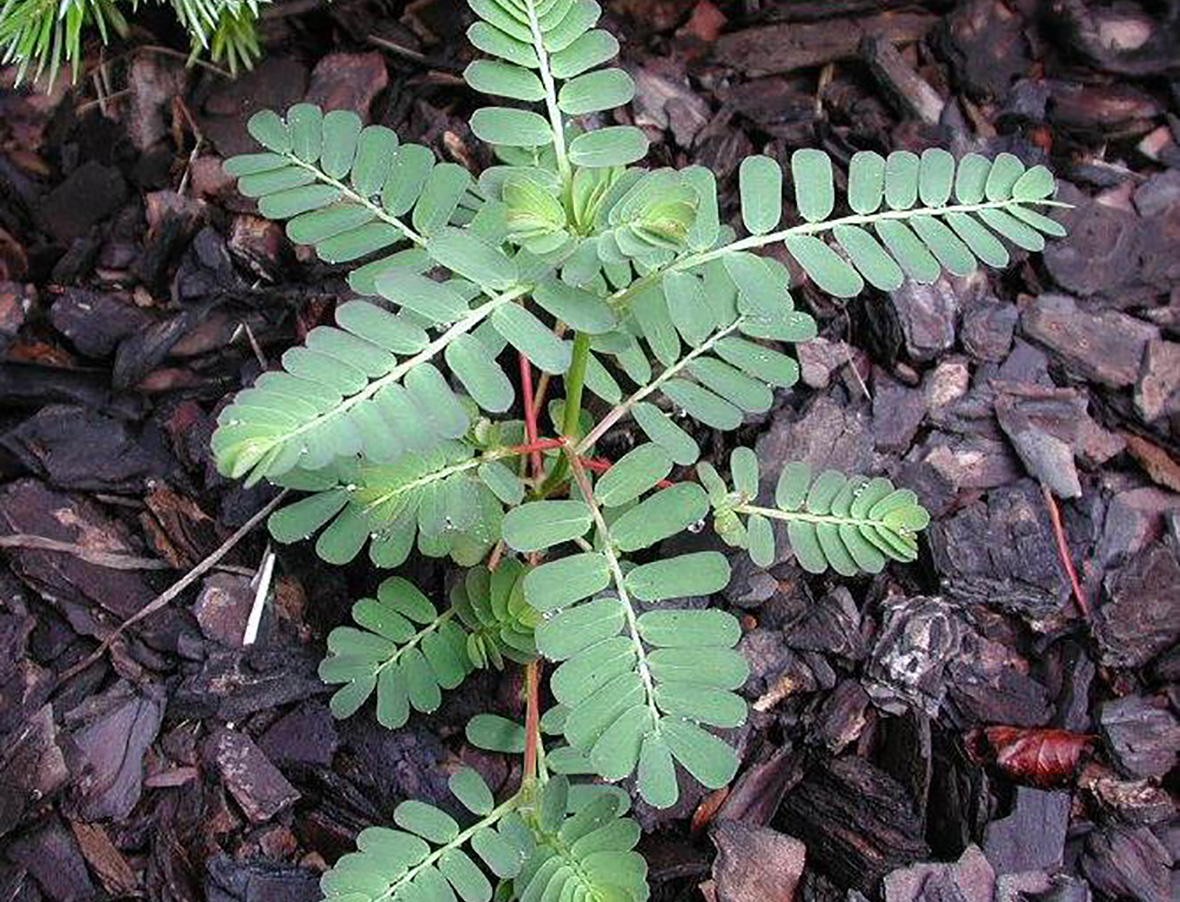
Chamber Bitter

Chamberbitter

Winged Elm:

Mockernut Hickory:

Daniel Yoon

A Brief Overview of Studying

4 min read

The Goal

Become comfortable 1) doing something specific 2) in a time-sensitive, high-pressure environment 3) with a high level of consistency and confidence.

Do this with reasonable time and effort.

Avoid misery.

Recognize the spectrum of knowledge and understanding

The unknown unknowns: The things we are blissfully unaware of. We don’t worry about these.

The known unknowns: The things we know exist, but don’t know. Most things exist in this space, and that’s okay.


The unknown knowns: Those bits of knowledge we forget even exist within our brains. These surprise us on rediscovery, yes, but these should move very quickly to the next category upon recall, until they eventually fade back here.

The known knowns: Things that are just on the periphery of knowledge. These require some concentration and time to bring to the surface. These require patience and coolness of mind. Most academic knowledge will sit here, especially if recently reviewed.


The internalized: That which can be instantly recalled, comfortably and reliably. Still vulnerable to unforced errors in stressful situations.

The mastered: That which could never be confused or mistaken, even in the worst of circumstances.

The Process

The Realm of Knowledge: Articulate and categorize everything there is to learn. Make a clear line between the unknowns and knowns. Compile all of the essential information into one spot-- this can be a reference, like a textbook, manual, or video, but it can also be an expert you trust.

Try to bring as much in to the known knowns as possible. These should be the basic rules of thumb, formula, and mnemonic devices that stick around without much trouble.

Study List: Identify which questions make you uncomfortable or slow you down, and determine the concepts that are troubling you. Compile these into a Study List. 

One at a time, eliminate the items from your Study List by gaining a better understanding of the concept.

Seek help concerning the subject: 1) primary reference material (e.g. textbook), 2) surface-level internet search, 3) generic website (e.g. Wikipedia), and 4) a trusted expert.

Drill List: Keep a clear record of any unforced errors that keep you from mastering a concept. The easiest way to test this is to practice in a distracting, stressful, or otherwise suboptimal environment. See what kinds of mistakes you start making and make a Drill List. Avoid repeating items from your Drill List at all costs.


---


This is the first of a specific type of post-- the Articulation--I want to make here: a quick, organized overview of a basic idea, put into words for future reference. These aren't meant to be original, innovative, or even interesting. 

An Articulation says something that a lot of people inherently understand, but most have never stopped to really put into words.

An Articulation reflects the spirit of those friendly late night tumblr blog posts, those meant to educate some lost soul out there who doesn't understand something very basic but useful.

An Articulation often comes off as trite, like an immature writer trying and failing to say something impressively deep or poignant. But it in fact is written in complete earnest, meant not to fascinate, but to inform.

An Articulation might be helpful to people who have a hard time reading between the lines.

An Articulation can cover anything, but I'd like to categorize them as such:

Philosophy [Anything that covers critical reasoning, morality, and the human experience]

Nature [Natural sciences, but with the fun twist of a complete lack of formal education]

Culture [The things that make groups of humans unique and joyful]

Craft [Woodworking, technology, electronics, etc]

Education [Academic, moral, cultural]

Society [Institutions, governments, and the theory of everything in between]

Storytelling [Books, television, movies, and folk tales]

Daniel Yoon

The Carudan 1 Year Retrospective

11 min read

It's already been more than a year at **the** Carudan Garden. It's grown a lot-- check out our instagram @carudangardens for sporadic updates. And this is our. . . log?

I don’t have the time or words to articulate all the important things I've learned in a year, but I hope to gather a few thoughts that might be helpful to others who would like to start a garden. My plan here is to lay out this huge list of ideas and concepts and eventually elaborate on specific ideas, one post at a time. I'm sure my first one will be either about seasons or compost.

A complete ecosystem exists in (relative) equilibrium. Balance tends to maintain itself

The cycle of nature (Growth -> Death -> Decomposition -> Birth -> Growth) forces completion or otherwise intervention to complete that cycle.

  • Modern Americans have a child-like aversion to death and decomposition. They want to sequester the gross things as far away as possible, so they can forget that things die and decay.
  • Mulch becomes something to buy from a store, because nature's mulch has been meticulously leafblown and raked, bagged to be hauled away.
  • Fertilizer comes in plastic bottles and liquid extracts, replacing the natural decay of organic material to enrich the soil.
  • Insecticides and habitat destruction destroy local (and global, btw) insect populations, leading to reduced pollination, decomposition, and nutrient cycling.
  • Completing this cycle requires the presence of the nasties-- the dead, the rotting, the bugs. We need to get comfortable with compost piles, insect populations, unsightly tree snags, and the occasional bit of muck.

Composting is an amazing first step towards restoring the cycle.

  • Waste becomes a resource. I could write a book on this. I'll probably write a post on this soon. But come on. Part of the reason I always lick my dinner plate clean is that I hate throwing away food. It's nasty, y'all. It sits in a plastic bag and decays. But when you throw that same waste into the ground? It just becomes more soil. It's magic.
  • Soil and organic matter is so important to fixing degraded, sapped soil. Georgia red clay cannot sustain a lot of plants. My blackeyed susans (notoriously resilient flowers) keep drowning in the waterlogged clay during these weeks-long rains.

A pond goes a long way.

  • Ponds attract and breed dragonflies. Dragonflies eat mosquitoes.
  • Mosquitoes will spend time laying eggs in the pond. Other creatures (tadpoles, fish, dragonflies) will eat the larvae. Delicious.
  • Wildlife loves water, for the same reason that we love water. Especially in the hot Georgia summer.
  • A pond is the easiest way to store rainwater. Let it accumulate during rainy seasons, then use it during the dry seasons. All it takes is a simple pump to divert the water as needed. It's Keynesian waternomics.
  • A water feature completes the ecosystem. A single body of water can give access to frogs, other amphibians whose names I don't know, thirsty/hot birds, so many cool insects, a ton of swampy plants, and maybe even ducks one day. I hope.

A larger system can give stronger support to individuals

  • A plant in a pot will run out of water very quickly compared to the same plant in the ground. Fungal mycorrhizae (which are like their roots) connect these plants' roots to vast underground networks supplying nutrients and water.
  • Under the Georgia sun, a companion tree or bush can provide essential shade during the hottest parts of the day.
  • Pollinators will visit larger groups of plants compared to single plants

The ecosystem relevant to our gardens is larger than we might think. And larger still.

  • Thinking about the soil is great, and even about shade and about the whole yard, but where are we, in terms of the biome? How can we adapt to not just hot Georgia summers, but specifically the Piedmont Plateau, in the oak-hickory forest that dominates my neighborhood?
  • How do invasive plants and animals tip the ecosystem out of balance? Don't get me started.
  • The overabundance of ticks, poison ivy, and bad soil are all results of imbalance in the ecosystem. Too many deer running around, too much fragmented forest, and too much clearcutting. 
  • Insects pollinate plants and feed animals. Dwindling populations threaten the entire system-- on a local level, yes, but on a global level as well. These bugs need leaf mulch, detritus, wood piles, bug hotels, tree stumps and snags, and generally dead/dying plants. 

The inexorable cycle of time is at once refreshing, terrifying, and reassuring. 

Seasons are brief, and different seasons demand very different mindsets

  • Herbaceous plants need close attention paid to their seasonal fitness
  • Spring hastiness leads to summer laziness leads to autumnal regret.
  • A careful, productive start makes for a strong, robust plant that can survive harsher conditions.
  • But a plant grown and adapted for one set of conditions may not be ready for another set. Sometimes plants take entire seasons to adjust to new environments. See: our Carolina Jessamine, which has only just started to really leaf out, after a year of settling in her new home.

Yearly cycles and multi-year cycles are also very important.

  • Patience, yes
  • But also future placement and growth rotation.
  • Compost
  • Raised beds, hugelkulture
  • Woody plants

Averages are important, but the variance is key.

  • A month might average out to a reasonable amount of rain, but many plants can't tolerate extended periods of drought or rain.
  • As climate change intensifies, we have to grapple with the longterm implications of more extreme weather conditions
  • Watering within a week-- inconsistent watering can be stressful for fruit. Not the biggest worry, but still.
  • Consistency within a season is also very important. Stifled growth during the spring means weaker resilience in the summer.

Natural science demands flexibility in scale and scope of analysis. 

Intentionally challenging myself to change up how I thought about things has really paid off.

Time. Consider things on the following scales:

  • Days: Water, temperature, and pest needs for herbaceous plants, compost disposal
  • Weeks: Water and general welfare checkups for hardier plants, compost turning
  • Months: Nutrient feeding (fertilization), growth maintenance (trimming, staking, supporting), compost cycling
  • Seasons: Propagation, transplanting, seed collection, fruit/crop harvesting, wood composting
  • Years: Garden design, woody plant health, nitrogen fixing, soil health
  • Lifetime: Climate change, biome shifting, toxin accumulation, climate security in general

Space. Divide, subdivide, and conquer.

  • Start with a small plot of land, a few square meters close to the back door that will be passed often and cared for daily. Here we will plant tomatoes, peppers, and other greedy herbaceous crop plants that demand water and attention.
  • Expand from there-- to the nearest bushes, trees, or landmarks that will help define the area's boundaries. The plants here are plainly visible but not always within reach, capable of withstanding a day or two of neglect. Extreme conditions, like ten days without rain in July, will demand special care, but the average week will pass without event.
  • Now we can plant our own trees and bushes, creating walls, contours, and points of interest (AND SHADE, HALLELLUJAH) within the garden. These trees will take time to grow, but eventually they will transform the landscape. They'll also provide extremely hardy consistency to the ecosystem, and depending on the choice, effortless fruit.
  • There may be little more to expand into in most gardens. For those blessed with the space, this is our opportunity to create semi-managed wilderness, a haven for wildlife and natural processes like reproduction, predation, and decomposition. This is the hardcore nature that we hope to support in basically everything we do.

Knowledge. Start small and keep learning.

  • Individual plant knowledge. Every plant has its own needs-- how much water does it need, how wet can it get, how dry can it get, how much sun does it need, how much sun will kill it, what kinds of nutrients does it need for specific growth (leaves, flowers, fruits, seeds, roots), what pollinators does it need to propagate, etc
  • Garden design. Each plant has to be placed somewhere, and it's a daunting task. All of the aforementioned needs have to be considered and matched together, one bed at a time.
  • Seasonal design. Each plant will do different things as the seasons pass. It's difficult to imagine how those autumnal behaviors will line up when you're looking at seeds in the middle of January.
  • Specific biomes. In the piedmont region of North Georgia, Zone 7b, there are many special things to consider: hot, humid summers, with at least one freeze per winter; waterlogging Georgia red clay; countless invasive species, both plants and insects; swarming mosquitoes from June to August; relentless sun from July to August.
  • Native vs non-native plants. This was a big one for me. I had a hard time coming to understand that the vast majority of plants discussed, sold, and planted in the metro Atlanta area is foreign. It takes much more work to learn about, find, and purchase native plants. Stay tuned for more info on this end. Please, for the sake of our country, learn more.
  • Science. There is much for me to learn in the way of biology, chemistry, and ecology. But I'm learning as I go, because that's the only way I know how. One day I will understand how to best fix the nitrogen in my soil, but for now I simply plant peas everywhere.

There's so much hidden below our feet, hiding in plain sight.

Natural resources

  • Wood (including bamboo), (Insect habitats, construction, kindling, mulch)
  • Fibers
  • Leaves (Mulch and compost)
  • Fruit and seeds (Food, propagation)
  • Weeds (Compost)
  • Stone and Earth (Construction)
  • Rainwater

Plants just grow for FREE

  • Natives hide in uncultivated areas. We've found the following on our property:
    • Muscadine Grape
    • Persimmon
    • Red Mulberry
    • Cherry Laurel
    • White Oak
    • Red Maple
    • Eastern Redbud
    • Spicebush
    • Elderberry
    • So many asters
    • Blue Mistflower
    • Common and Late Boneset
    • Partridge Pea
  • Birds bring local plants, especially if you happen to live near nature preserves, parks, or wildlife sanctuaries. I figure most of our mulberries and redbuds appear this way.
  • Seeds are really easy to come by, and although they may not work as quickly or reliably as desired, they're cheap enough to never be a waste.
  • Plugs and seedlings take time, patience, and consistency, but they can eventually lead to ridiculously vigorous plants. We've had little success on this end, mostly because we lack consistency to an extreme degree. Somebody help.

So much of the cost of living is keeping up appearances

  • Bushcraft and "redneck engineering" can provide 90% of the function of a retail product. I think it tends to look, feel, and decompose, better, too, because there's 100% less plastic involved.
  • A lot of landscaping expense is just. . .  making things look tidier and nicer. Like raking leaves. But raking leaves just takes time and energy to throw away one of our most precious sources of mulch. Crazy, isn't it?

Details

What's worked?

  • Low-effort, low-vigilance plants like coneflowers and bushes.
  • Compost piles. So much compost. It's really just so nice.
  • Cottage garden looks nice, if a bit sparse.
  • Raised beds are thriving. These could be expanded tenfold.
  • Tree saplings are growing, especially the mulberry.
  • Letting natives grow-- blue mistflower, goldenrod, asters, muscadine grapes, partridge pea!!
  • Weeding chamberbitter, hawksbeard, many others. Noticeable population decline since last year of both hawksbeard and chamberbitter

What hasn't worked?

  • Mosquito control. June through August is still mosquito season, though I swear I'm noticing fewer bites these days, now that hurrican season is over.
  • Peach tree is dead. RIP.
  • Growing under shade is very difficult. The fig tree does not allow for much to grow underneath.
  • Growing in pure clay is hard for any plant, especially during rainy seasons.
  • Squash flowers/fruit never came about :(
  • Cedar bed has been sad. Next year we'll just do crops, probably. The wildflowers have been difficult.
  • Year 0 compost is not initially effective. Our crops lagged behind by about two weeks, but have caught up since. We can definitely expand our growing and harvesting season next year by a few weeks.

What will we try this winter and next spring?

  • The Pond
  • Bat Roost
  • Bird Feeders
  • Quail Hutch

I hope this rambling list is interesting.

Daniel Yoon

Not Perfect, but Progress

2 min read

It's hard to change our ways.

I love writing, but I never do it. I wish this postboard were filled with my thoughts, an inviting wall of ramblings and musings and treatises. Instead, I haven't added anything in months. This is only my first post this year.

I love to take notes and organize my thoughts and plan for the future, but most of my life goes improvised, moment to moment. My calendar is only useful for work, not for real plans.

I want to be a scientist so badly, but it's so hard to take notes, to follow routines, or to be consistent in any meaningful way. My garden spreadsheet is woefully incomplete.


But. . . I don't know. I'm working on it.

It comes and goes. Mostly it goes. But here I am, adding my second post to the postboard. It's not long, and it's not elegant, but it's a thought I'll be glad to read again in the future, and I'm happy to share it with you.

My calendar does help me with work.

And my spreadsheet is coming along. In fact, I added to the log just today, and I'm going to try very hard to do so again on Friday.


I will be back, soon.


And then again, I will return.


Happy (belated) new year. I hope to hear from you.


Joseph

Cold

2 min read

I hate being cold.


Coming from an Asian household, I grew up with absolutely zero knowledge on how to use a thermostat. It was an unthinkable act to turn up the heat. 

"Just put on more clothes"

And even now as a homeowner, old habits die hard. I write this while wearing a hooded jacket, thick winter pajamas, socks, and slippers. Oh and a cup of tea.


I remember my first lunch in high school. I chose to eat outside at the furthest table. And that's where I spent the next 3 years at lunch time. Like the postal system, rain, sleet, hail, or snow, I was out there. And of course as everyone did, I tried to fit in. Many of my peers would wear basketball shorts, so it didn't matter if I was to succumb to frostbite (I definitely googled symptoms because I was scared), I too would have to wear basketball shorts no matter the forecast.

Nowadays, I wear ear muffs in my kitchen as I prepare coffee in the morning and I wear it until my car is finally warmed up, usually about 4 minutes in to my commute. I wear the thickest jacket I can find, and I wear it all day in the office until I'm sweating.

Because I realized I hate being cold

And I had no reason to remain cold

I see all these younger kids who wear t shirts and shorts during the winter, and I find myself repeating all of the annoying things I heard adults say to me so many decades ago.

"Aren't you cold?" "Where's your jacket?" "You're going to catch a cold"

Maybe they feel the same pressure I did. The audacity to overcome Mother Nature. The Spartan-like defiance of my body's pleas and cries for warmth, just to feel some sort of accomplishment. The desire to get noticed by going against the grain. The haughty pride of actively destroying my own comfort for absolutely nothing but this silly construct I created in my head.

Maybe getting older is realizing some thoughts are better left behind.

But of course change of heart, of habits, of paradigms don't happen overnight.


Over the past few months, I've convinced my wife to turn up the thermostat to a nice 68.

One day, I'll live in my house in t-shirt and shorts.

Daniel Yoon

Graduation Mixtape

2018's hottest release

5 min read

"You have to listen to this one," he said, shoving into my ear a headphone bud linked to his iriver mp3 player. "It's not like other songs. This one is, like, actually saying something."

"What's it saying?" I asked.

"Hm." He thought hard. "It's better to have something to run away from than to have nothing."

"Huh?" 

I didn't know what that meant, but I trusted the three and a half years of wisdom that my older brother had on me, and at eight years old, I could at least read along as he scrolled through songlyrics.net.

Bleeding thoughts
Cracking boulder
Don't fall over

"What is this?" I asked. It was a slow song, but the guitar riff in the background scratched an itch that I didn't know I had, so I kept listening.

Sing it louder,
Twist and shout

I recognized that phrase, twist and shout, because my teacher had once asked our class in shock how we didn't recognize some song from the 60s. Boomer

Nothing to run from
Is worse than something
And all your fears
Of nothing

Ah, there it was-- that sounded exactly like what my brother had said, though I still didn't know what it meant.

Concrete girl
Don't fall down
In this broken world
Around you

"Huh," I said, and I turned my attention back to killing slime monsters in Maplestory. I didn't understand what "Concrete Girl" was trying to say, and I didn't want to say anything stupid, so I stayed quiet.

And that was that.

But not really, because after that, I began to wonder what songs could mean-- you know, other than "I love you, my romantic true love," and "I love you, God." I'd heard those songs sung a million times. But the idea that someone could say something. . . original? unique? insightful? within the confines of a song fascinated me. So I started my "I'm so sick of love songs" phase before I turned ten.

I didn't listen to the radio growing up, but I was always on the hunt for more music. Not just anything, mind you-- not only were love songs beneath prepubescent Daniel, but the vast majority of contemporary music was also simply too inappropriate. Yeah, that didn't stop Blink-182 and Yellowcard from slipping into my music library, but it meant I was stuck on family-friendly Switchfoot for a decade.

So Jon Foreman taught me, and I listened, and I studied.

How many nights did I fall asleep to Oh! Gravity spinning in my boombox?

These songs taught me to articulate not just the rational ideas that we can put into words, but those human emotions that underlie every syllable. It's more than just our stars being unanimously tired; it's the desperation behind the plea-- that something out there might be strong enough to support us for just a semblance of stability. It's that strange guitar melody that doesn't really seem to go with the words, how it all builds with the percussion but then gives way to almost nothing each chorus, leaving behind only the words and the guitar again.

And when you draw the listener in with an intriguing sound, like the shifting time signatures and grungey guitars in "Dirty Second Hands", you have free rein to lay facts down, cryptic but clear, like a slap in the face hiding in plain sight. If we can't trust the American Dream, then what are we doing?

With an army of me
We invent our own enemies
Man versus machine
And the dirty second hands, the dirty second hands
In the land of the free
And the home of the remedy
The old clock is a thief
With dirty second hands, dirty second hands

And teenaged Daniel wonders for the first time in his life: 

What is productivity, why are we building, and who are we fighting?


--

I milled through a lot of (safe) rock music in my preteen years, wondering who else out there could blast out my eardrums with words that meant something.

Somehow I found Epik High.

Ironically, the first song was "Free Music", a freestyle-type song that features Tablo and guest MYK just having fun rapping and rhyming and saying things without saying much.

But that song blew my mind.

From the top, rewind
Wrote rhymes in my dad's attic
Rap addict since Illmatic and I'm still fanatic
Never stop but when I'm stopped
I jog my mind around the writer's block
Till it's out of breath and asthmatic
I've had it with the paperchase, need I mention?
The rap game is all show and lyrical descension
Pretension, obsession for physical possession
I'll pay for your CD, but pay no attention
Ascension, I'll never lie to get it
Fake people piss me off like diuretic
To die or live it, you know the choice is yours
Just make sure that the voice is yours

"Yes sir," I said, head bobbing like a maniac in the library.

And then I heard the rest of Map the Soul and I leapt, eyes closed, into the world of hip hop.

It's a lot harder to talk about Epik High lyrics because the most impactful moments are in Korean, and I can barely understand what's happening, much less talk about it. So we'll leave that for someone else.

Not every song has to mean so much. But it's fun to have more to dig into, isn't it?


--

If you didn't know, I released Graduation Mixtape on bandcamp back in January 2018.

If you're familiar with either Switchfoot or Epik High, you'll probably recognize a lot of the ideas and motifs I sing about. I love that movement of ideas, that process of stitching a canon together from different minds going "What a great way to think about that". 

I hope something in all this will inspire you to create something of your own. It's only human.

Daniel Yoon

About All This

What are we doing on Carudan.net?

6 min read

So you've found your way onto my website. Let's keep it simple-- this is my digital sandbox, where I'm messing around with self-hosting a bunch of different things. I'm here to try new things, learn, log my efforts, and ultimately create something that can face the public in some way. I want this to be worth visiting for our family and friends-- maybe not every day, or every week, but every once in a while, just to check in.

So what do we have here? You'll notice six buttons on the front page at carudan.net.

1) The first is audiobooks. I'm building my own audiobook/ebook library to share with friends and family through audiobookshelf, which allows you to listen, sync, and download anything I have to your own device. It's basically Amazon's Audible, except just for my library. The secret is you can ask me to get basically any book, and I'll probably be able to get my hands on it one way or another (i.e. at no cost to you (or me, probably)). In fact, I can automate it to hook up to your Goodreads "Want to Read" shelf so it just appears without talking to me at all. This last automation function is. . . still in testing, so please be patient with me :) Right now, the library is primarily Agatha Christie, fantasy, new Star Wars, and romance novels hahaha

2) The second is study solis. This is my self-hosted writing experiment, powered by Typemill, where I'm publishing the rough draft chapters of my book as I write them. Caroline knows I am terrible at making progress, so this is my way of trying to keep myself accountable. And I want to connect with anyone who's interested in my writing! The first novel is called a young-ish adult, new adult (maybe??) fantasy story called The Huntress, and I'm on chapter 7 of 52 right now. I'm posting raw, basically from my phone, pre beta. Once I finish my first draft, I'm going to ask people to beta read the whole book and give me thoughts on plot, characterization, and other broad strokes, and then we basically begin building towards the rewrites that will become the "final draft". Of course I'll listen to any feedback anyone has in the meantime, but right now I'm just trying to churn out words.

In other words, it's in an alpha state, so don't expect too much, but it's a fun time!

3) The third is the postboard, which is what we're on now. This is powered through Known, which has been really easy to work with. I'm intentionally siloing this postboard from my story "blog" because I want this one to be more social. This might seem ambitious, but I'm imagining a nano-network, composed of less than a few dozen people who are all interested in. . . I'm not sure. Being cool with us? HAHA. 

Look, it'll start off as my own little blog, where I chat about this and that, get things started. But I hope that eventually others will find value in sharing their own thoughts about whatever seems relevant. It's not about cultivating some clique of smart minds, but fostering a community during a time when it feels increasingly difficult to do so. At the end of the day, I want to hear from everyone.

So what am I (and eventually we) writing about? I have a lot of ideas to begin with: gardening (duh), native ecology (of course), cooking, music, games, pop culture, woodworking, housekeeping, crafts, writing, and Atlanta. I'm not exactly avoiding the "serious" stuff, like law and social policy, but I guess I don't see the value in writing about those things for me right now. But obviously there are those of you out there from whom I'm dying to read a 10k word rant about whatever.  But for now, I'm just trying to get the ball rolling. Hopefully I'll keep things neat and organized enough.

4) The fourth button is requests. This is the Ombi Request Hub, where you can ask me to acquire any television series or movie that's. . . not lost to time. If you don't understand the point of this, feel free to ask me!

5) The fifth is network. I honestly don't have the greatest idea for what this is going to look like-- obviously it's not set up yet. At the very least, I want a communal calendar where Caroline and I will be able to keep track of the garden. Or something like that? I'm really not sure yet. But basically, I want it to be a way for us to connect with our friends and families about our garden.

Once I get Nextcloud figured out, which shouldn't really be that bad, I'll have a better idea of what I should make this. Let's have it done by spring.

6) The sixth is the garden. Now that I think about it, this might be the same thing as the fifth. But maybe I'll just make it a mediaboard for the garden? I don't know!!! Maybe this is the blog for the garden anyway, so I don't need a separate site for the garden? But I do want to host a resource for the hyper-specific niche that we're learning about at home, in terms of building a natural landscape and sustaining wildlife. Basically, if Caroline and I can create a natural woodland and wildlife sanctuary in our backyard, I want to document and share what we learn with others who are interested. And I want to share the information without necessarily tying it back to Caroline and me (i.e. if it can generally be anonymous that'd be nice) so I'll probably share through Google Drive and call it a day. And maybe this button will simply be a link to the drive folder.

If you're wondering, the information I have so far amounts to-- my list of a few hundred plants that are worth considering as native specimen for the piedmont region, with plenty of details on their preferred conditions; a collection of plant guilds and combinations that might make sense, obviously still a huge work in progress; and a bunch of random thoughts on how to get started on a sustainable garden, i.e. water-wise, wildlife-supporting, and ecologically responsible. 


Anyway, it's all still a work in progress, but I hope this gives an idea of what's going on here. If you want to join this postboard, there are no real rules. Just speak your mind and work towards the "good". We'll figure out what that really is together.


Daniel Yoon

It begins. Happy Thanksgiving :)